
Quick Summary: The best rural places to visit in Japan sit off the Tokyo to Kyoto route, in Tohoku, San’in, Fukui and Toyama, Shikoku, Hokkaido and Kyushu. Small towns such as Kakunodate, Uchiko and Arita are worth a night or two each, and spring and autumn are the most comfortable seasons to travel in. Once you’re there, it pays to carry cash, check train times before you book your inns and send your main bag ahead by courier.
By The Journey to the East Team, Japan small group tour operators, ATAS and CATO accredited
Rural Japan travel suits the visitor who has seen Tokyo and Kyoto and wants to know what lies beyond them. Rice terraces, samurai streets and working harbours begin a few hours from the big cities, and few foreign visitors reach them. Many of our small group tours spend their days in these regions, so the five stops below are places our guides know first-hand.
Where Are the Best Rural Places to Visit in Japan?
North, west and south of the Tokyo to Kyoto corridor, where working farms, craft towns and old streets carry on well away from the main tourist route.
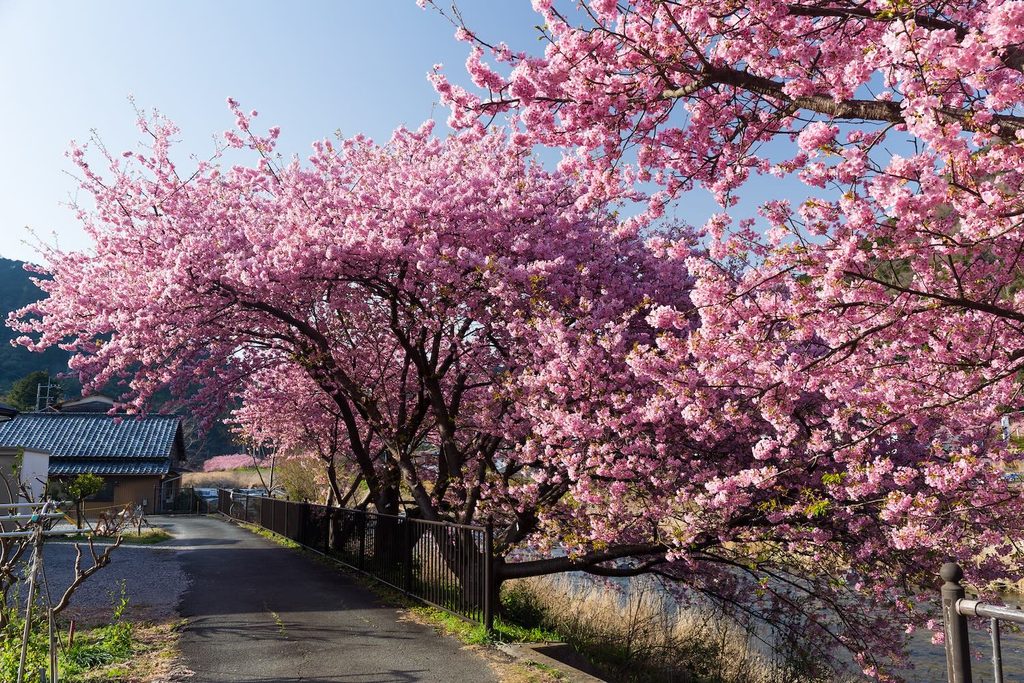
Tohoku: Kakunodate and the Samurai North
In Kakunodate, you walk a street of samurai houses that looks much as it did 400 years ago. Weeping cherry trees hang over the lane, and on our tours you try the local cherry bark craft in a workshop. Further north, the Oirase Gorge trail follows a clear stream past waterfalls and moss-covered rocks, to Lake Towada.
Our Japan autumn tours walk the gorge in late October, when the valley turns red and gold.
San’in: Izumo, Iwami Ginzan and the Oki Islands
San’in, the quiet western coast of Honshu on the Sea of Japan, is the heartland of Japanese mythology. Once a year, tradition says every god in the country gathers at Izumo Taisha. Inland, the lanes of Omori wind past samurai residences and old shopfronts below the Iwami Ginzan mine, which once produced a third of the world’s silver. Then take the ferry to the Oki Islands, where cliffs drop 257 metres into the sea.
Our Japan regional tours take in all three of these spectacular destinations.
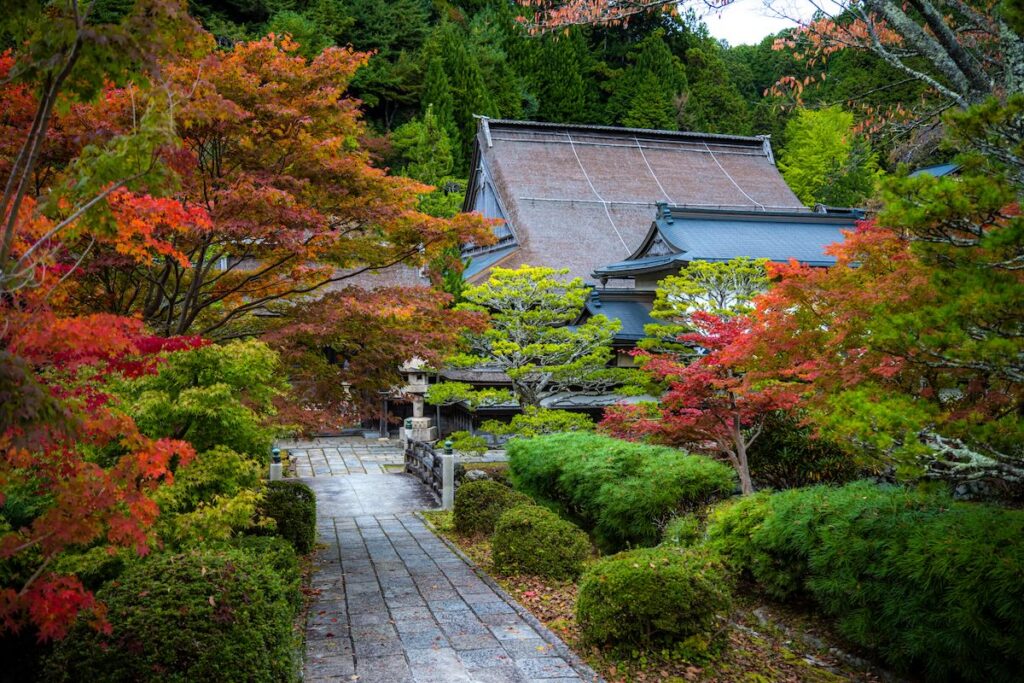
Fukui and Toyama: Zen Temples and Craft Villages
Few international visitors reach these two prefectures on the Sea of Japan. At Eiheiji, deep in the mountains, more than a hundred monks still practise Zen, and you walk through their monastery as a guest. In nearby Echizen you can watch washi paper being made by hand and try crafting a sheet of your own. End the day at Unazuki Onsen, with your feet in a riverside footbath at the entrance to the Kurobe Gorge.
Our Japan cherry blossom tours stop at all three in spring.
Shikoku: Uchiko and the Pilgrim Country
On Shikoku, the smallest of Japan’s four main islands, old ways of life are still visible. In Uchiko, a 600-metre street of pale yellow merchant houses leads to a 1916 kabuki theatre, where a tour shows you the revolving stage and trapdoors. Further south, you can canoe the Shimanto River, which runs 196 km without a major dam. Beyond are the pilgrim paths of the 88 Temples and the vine bridges of the Iya Valley, which we cover in our guide to going to Japan’s hidden treasures.
Our guided walking tours in Japan visit all four.
Kyushu: Pottery Towns and Tea Fields
Inland Kyushu is for anyone who likes to see things made. Arita was the first place in Japan to make porcelain, and even the shrine above the town is fitted out in it. In Karatsu you can hand-form or wheel-throw a piece of your own. And at Yame, in the south of Fukuoka Prefecture, 70 hectares of tea spread out below the lookout like a green carpet.
Our Japan food tours stop in Arita and Karatsu.
How to Plan a Rural Japan Trip
- Check timetables first: Trains and buses run far less often than in the cities, so plan the connections before you book the inns.
- Carry cash: Japan’s national tourism organisation advises that many places in rural areas still take only cash, including some hotels.
- Send your bag ahead: Takkyubin couriers move a suitcase from one hotel to the next, usually by the following day, so you can travel with an overnight bag.
- Expect traditional rooms: Country inns are often ryokan or family-run minshuku, with futon bedding on tatami floors and, in a minshuku, shared bathrooms.
- Allow for less English: Signage and spoken English thin out the further you get from the big cities.
- Expect traditional food: Meals in Rural Japan are mostly Japanese and often fish-based. Coffee, black tea and Western breakfasts or dishes may not be available.
You can also hand the planning over to the experienced tour coordinators of Journey to the East. Our Japan regional tours cover these areas with a licensed local guide and 6 to 8 guests, and our private Japan tours can link several regions on your own dates.
Frequently Asked Questions
What Are the Best Rural Towns in Japan for a First Visit?
Kakunodate, Uchiko and Yame are good first choices. Each has a preserved historic street you can walk from end to end, with old houses and small museums along it. Arita suits anyone interested in ceramics. Hida Furukawa, 15 minutes by train from Takayama, is the easiest to add to a classic itinerary.
When Is the Best Time for a Rural Japan Trip?
Spring and autumn. Cherry blossom reaches Kakunodate in late April, around a month after Tokyo, and our Japan cherry blossom tours follow it north. Autumn brings the leaves to the mountains and the rice harvest to the valleys. We don’t recommend the height of summer, when the heat and humidity make walking hard work. Our guide to the best time to visit Japan has the details.
Is It Hard to Get Around Without Speaking Japanese?
It takes more planning than the cities. Timetables are thinner and English is less common, but none of it is out of reach for a patient traveller. If you’d sooner leave the logistics to someone else, a licensed local guide handles the transport, inns and tickets so you can focus on each destination.
Ready to see the countryside for yourself? Browse our Japan small group tours or call Journey to the East on +61 7 3368 1966 and tell us which region caught your eye.
About the Author
The Journey to the East Team, Japan small group tour operators, ATAS and CATO accredited
Journey to the East has run small group and private tours of Japan for 13+ years, with teams in Queensland, Australia and in Japan. Every itinerary is handmade by our own staff and never subcontracted, and our licensed local guides lead groups through these regions every year.