
When is the best time to travel to Japan?
The best time to visit Japan is usually spring, from late March to May, or autumn, from late September to November. Both bring mild weather and the scenery Japan is known for: cherry blossom in spring, red and gold foliage in autumn. They are also the busiest and most expensive months, so they suit some travellers more than others.
There is no single answer that works for everyone. The right season depends on the weather you can handle, your preferences regarding crowds, your budget, and what you most want to see and do. Japan is long and narrow, so conditions swing from snow in Hokkaido in the north to mild days in Okinawa in the south on the same date. This article walks through each season and month for weather, crowds and cost, and how to plan around Japan’s busiest periods, so you can pick dates that suit you.
Japan’s Four Seasons at a Glance
Japan runs four clear seasons, and each one changes the trip completely. Spring and autumn get the headlines for good reason, but summer and winter both have a strong case depending on what you are after.
- Spring (March to May): cherry blossom, mild temperatures and long daylight. The most popular and most booked season.
- Summer (June to August): hot and humid in the cities, green and alive in the mountains, and full of festivals. The rainy season runs from June to mid-July.
- Autumn (September to November): comfortable temperatures and the country’s famous autumn leaves.
- Winter (December to February): cold in the north, milder in the south, with snow, skiing and hot springs. The quietest and often cheapest season.
Because Japan stretches such a long way north to south, the same week feels different depending on where you are. In February, Hokkaido is deep in snow, while Okinawa is mild enough for a light jacket. Cherry blossoms reach Tokyo and Kyoto in late March, but Hokkaido does not see sakura until late April or early May. Wherever you go, check the forecast for that region rather than for the country as a whole.
Spring and autumn give most travellers the mildest weather and the best of the scenery, but they are also the busiest weeks of the year. The part most blogs skip is that where you stand matters as much as when you go. The same blossom or autumn colour that draws a crush at the famous sites is often quietly at its best in a mountain village or an old post town an hour away, if you know where to look.
Spring and Cherry Blossom Season
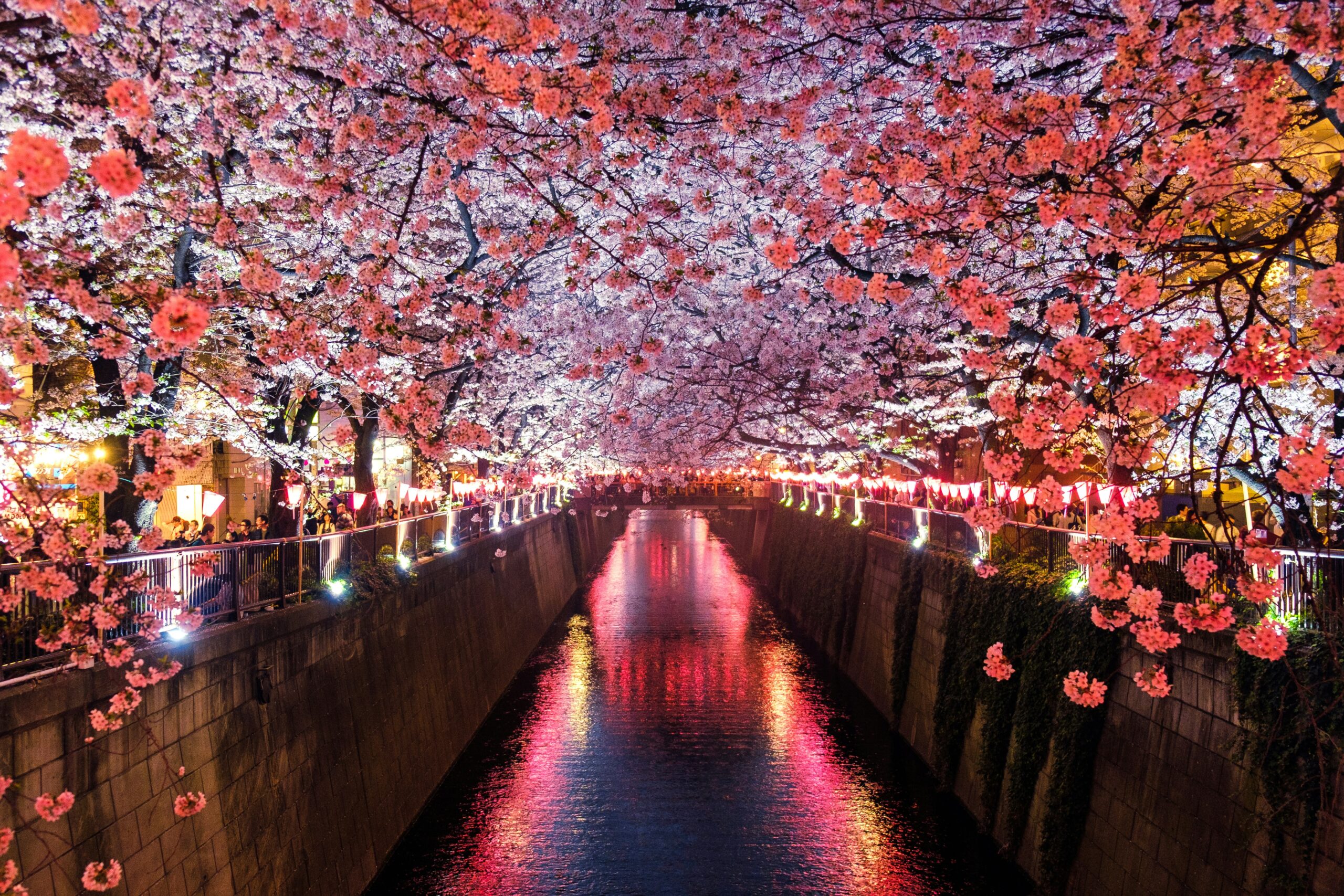
Spring is the most popular time to visit Japan, and the cherry blossom is the reason. In an average year, sakura reaches full bloom in Tokyo, Kyoto and Osaka between late March and early April, then the bloom moves north. Full bloom is brief, usually about a week, so timing matters.
When do the cherry blossoms bloom in Japan?
Bloom dates shift a little every year with the weather, and warm winters pull them earlier. The Japan Meteorological Corporation publishes a forecast each year across roughly 1,000 viewing spots. In 2026, a warm February brought the blossom forward by several days, so Tokyo hit full bloom around 26 March, Kyoto and Osaka close to the end of the month, and Sapporo in Hokkaido not until early May. If sakura is the goal, plan for the last week of March through early April in the main cities, and build in two or three nights per place, so a few days of rain do not cost you the bloom.
Spring weather is mild, with daytime temperatures around 10 to 20 degrees in the cities and light layers most days. It is lovely. It is also when hotels and flights are at their most expensive, and the famous spots are at their most crowded. Book accommodation and any rail travel months ahead, especially for late March and April.
For a first trip, standing under a tunnel of sakura along a river, or watching Mount Fuji rise behind the blossom at Lake Kawaguchiko, is the kind of thing people plan a whole trip around. The catch is that everyone else has the same idea, and the most famous spots can get shoulder-to-shoulder in peak season. This is where knowing Japan properly earns its keep. The blossom that stays with people is rarely the one they queued for. It is a row of trees along a quiet castle moat, or sakura framing a mountain shrine at first light before the tour buses arrive. Those are the corners we plan around. Our spring cherry blossom tours are timed and routed around those moments, so the blossom feels like a discovery rather than a scrum.
Autumn, Summer and Winter Compared
Autumn: foliage and quieter shoulder months
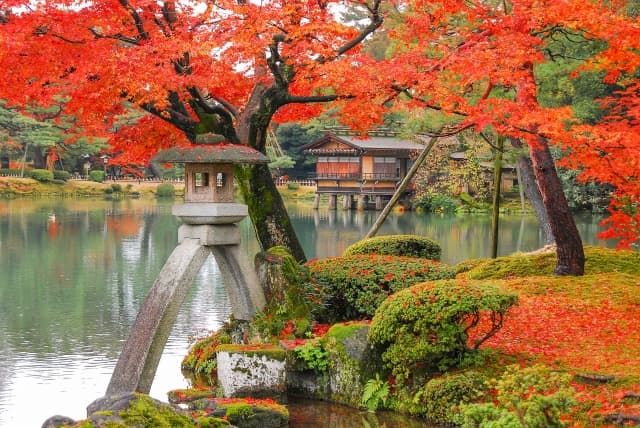
Autumn is the other peak season, and plenty of people who have travelled in both prefer it to spring. From late October into November, the autumn leaves turn the hills and temple gardens deep red and gold, the air is crisp, and the heat of summer is gone. Daytime temperatures sit in a comfortable range, the rain eases off, and the foliage works its way south through October and November, the reverse of the cherry blossom front. The season is rich with festivals too, from Kyoto’s Jidai Matsuri in late October to the Takayama Autumn Festival.
The flip side is the same one as spring: the postcard temples and famous maple valleys draw a crowd at their peak. The trick is knowing how the colour moves. Because the foliage rolls south over several weeks, there is almost always somewhere hitting its best moment quietly while the headline spots are packed. A gorge in the north, a temple garden in a town most visitors skip, a stretch of an old walking route like the Nakasendo: the colour is the same, the crush is not. Early autumn, in September and early October, is a genuine shoulder period too: still warm, fewer crowds, and lower prices before the leaf-viewing rush.
Our autumn tours of Japan run through the best of the foliage windows, routed to keep you in the colour and out of the queues.
Winter: snow, skiing and hot springs
Winter is the quietest season for most travellers, and that is part of the appeal. Tokyo and Kyoto are cold but often clear and dry, with daytime temperatures around 4 to 10 degrees and far thinner crowds at the big sights. Head north, and the snow takes over. Hokkaido and the Japanese Alps get some of the most reliable powder anywhere, which is why the ski resorts fill from December to February. It is also the best time for an onsen, soaking in an outdoor hot spring while snow falls around you, and prices outside the New Year holiday are some of the lowest of the year. Mount Fuji is at its clearest on crisp winter mornings, too.
Explore our Winter & Snow Tours of Japan

Summer: festivals, heat and the mountains
Summer is hot and humid in the cities, with July and August pushing past 30 degrees and often near 35 in Tokyo, Kyoto and Osaka. It is also the festival season. Some of the country’s biggest festivals happen in July and August, from huge fireworks nights to centuries-old matsuri processions through the streets. The trade-off is the weather. The rainy season, tsuyu, runs from June to mid-July across most of the country, though Hokkaido largely escapes it, and typhoons become more likely from August into autumn. If you travel in summer, head for higher ground: the Japanese Alps, Tohoku and Hokkaido stay far more comfortable, and July and August are the only months you can climb Mount Fuji.
Explore our Guided Walking Tours of Japan or Rural & Remote Japan Tours

Choosing the Best Month to Visit Japan
There is no single best time to visit Japan, but some months suit particular priorities better than others. Once you know the seasons, the question becomes which month.
Best months for mild weather and scenery
For the best mix of mild weather and scenery, the strongest months are April, late October and November. April brings cherry blossom and warm, settled days. Late October and November bring the autumn leaves and clear skies. May is a quiet winner too: the blossom is gone, but the days are warm and green, and the spring crowds have thinned out, apart from the Golden Week stretch at the start of the month.
Best months for fewer crowds and better value
If you would rather skip the crowds, the shoulder months reward you. Late May and June, before and during the early rainy season, and early September bring lower prices and far fewer people. Winter, outside the New Year period, is cheaper again, especially in January and February if you are not chasing the ski fields. You give up some guaranteed sunshine, but you gain space at the big sights and a fair bit back in your pocket.
Crowds and What to See
Planning around flights, holidays and peak periods
Airfares and the best-known sights move with the calendar, wherever you are flying from. Prices climb around the major school holiday periods, and they climb again whenever those line up with Golden Week in late April and early May or the autumn leaf-viewing rush, when demand from inside Japan and overseas peaks at once. If your dates are flexible, travelling just outside those windows usually saves a noticeable amount and buys you more room at the big sights. It is worth planning for: Japan drew a record 42.7 million visitors in 2025, up almost 16 per cent on the year before, so the famous spots are busier than ever. Working around that is most of what we do. Every one of our tours is handmade and arranged by our own people in Australia and Japan, never handed to a subcontractor, which is how we get you to a site in its quiet hour, or to a quieter place altogether with the same view, and how the days run without the glitches that come from a trip booked off a template
What to See and Do Across the Seasons
What to visit in Japan shifts with the calendar, and leaning into the season makes for a better trip. In spring, that means hanami under the cherry blossom and gardens at their freshest. In summer, mountain walks, festivals and the cooler north. In autumn, temple gardens and mountain valleys are lit up with foliage. In winter, snow country, ski fields and long soaks in an onsen. Tokyo and Kyoto are worth a stop in any season, but the countryside is where the time of year really shows itself, and where knowing the right village or trail at the right moment counts for the most. If you want a slower, more flexible trip, a private tour of Japan can be built around the exact season and pace you want, and shaped around the quiet corners of Japan most visitors never reach.
Frequently Asked Questions
When is the best time to visit Japan?
The best time to visit Japan for most travellers is spring, from late March to May, or autumn, from late September to November. Both bring mild weather and the country’s best scenery, cherry blossom in spring and autumn leaves in autumn. They are also the busiest and most expensive seasons, so if crowds or budget matter to you, a shoulder month or winter can suit you better.
When is cherry blossom season in Japan?
Cherry blossom season in the main cities, Tokyo, Kyoto and Osaka, usually peaks between late March and early April. It starts earlier in the warm south and reaches Hokkaido in the north around late April or early May. Full bloom lasts only about a week at each spot, and warm winters can bring it forward, so check the year’s forecast before locking in dates.
When is the best time to visit Japan for active seniors?
For travellers who want comfortable days on their feet, spring and autumn are the easiest seasons, with mild temperatures and good walking weather. They avoid both the heat and humidity of summer and the ice underfoot of deep winter. The trade-off is crowds, and that is where local knowledge counts. We keep our groups small and our pace unhurried, and because every tour is arranged by our own team rather than a subcontractor, we can hold space at a quiet temple or a lesser-known viewing spot at exactly the right moment, so you get the scenery and the calm without the crush.
How far ahead should I book a trip to Japan?
For spring and autumn, and especially around Golden Week, book several months ahead. Hotels and bullet train seats in Tokyo and Kyoto sell out fast in peak weeks. You also need to know that your bullet train seats can only be booked one month out, so it’s very time sensitive. Shoulder months and winter give you more flexibility. The closer your dates line up with cherry blossom, autumn leaves, or a public holiday, the earlier you should book.
Still weighing it up? That is what we are here for. Journey to the East runs small group tours across Japan in every season, capped at a handful of guests and paced for travellers who would rather take a place in than tick it off. Tell us how you like to travel and roughly when you are free, and we will help you choose the best time to visit Japan for you.
About the Author
Yuki, Founder, Journey to the East
Yuki is the founder of Journey to the East, an Australian tour company that has specialised in small group tours of Japan for over a decade. She and her team have spent years living in and travelling across Japan, designing unhurried tours that reach the quiet, spiritual corners of the country most visitors never see. Every detail is planned in-house by her own people in Australia and Japan, which is why the trips run so smoothly. She has experienced Japan in every season, many times over.